News from the farm
28/07/26
I filmed a short video last Thursday when I harvested for the veg bags - I hope it gives you a little glimpse of what goes into preparing your orders
Responding to a changing climate

The topic of climate change and farming is huge and I don't really feel ready to talk about it, but I thought given the weather we've been having, it's hard to ignore. When the first heatwave came we had no idea how long it was going to last and when to next expect rain - I don't think any of us expected this.
All of our irrigation comes from an existing bore hole, so far we've been very fortunate to not have any issues but we also have no idea if we're in any danger of running out. I think we need to explore rain water harvesting going forwards, if nothing else, so we're not reliant on one system.
Perennials
Currently all of our crops are grown as annuals, but we'd like to explore incorporating perennials going forwards. Perennials can be more resilient to draught conditions as they tend to have deeper and more established root systems so are better able to find moisture in the soil.
Annuals also require high amounts of water, both in the nursery to get them going, as well as when they're transplanted in the ground.
We've started by ordering perennial kale cuttings, we're hoping we'll be able to get a harvest from those late spring next year.

Seed saving

Another key strategy we're adopting to be more resilient in a changing climate is to do our own seed saving. Although we choose to buy local seeds as much as possible (we're very lucky to have Real Seeds and Vital Seeds growing so close to us), there's a huge opportunity to breed your own plants that are best suited to your growing space.
We're further increasing those benefits by encouraging a wide gene pool by cross pollinating lots of our crops. Some plants are very easy to cross like the cucurbits, and some less so, like peas.
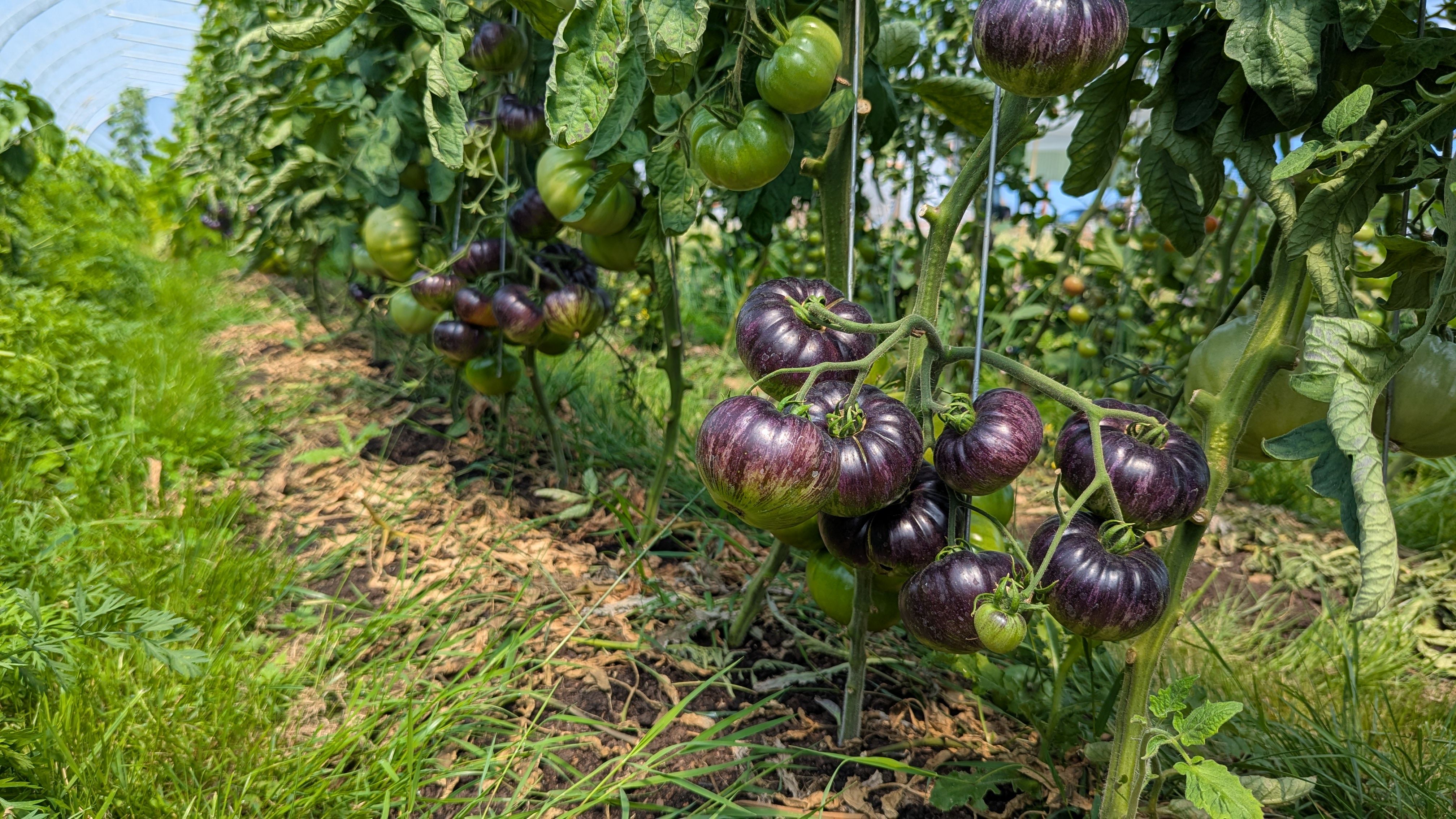
So far this year, we've already saved seed from our peas, tomatoes and cucumbers, and have plans to save our peppers, aubergine, courgettes, winter squash and even carrots.
It all comes back to the basics of natural selection, whichever crops are coping well in this heat, those are the genetics we want to keep going forwards.
© 2026 - Ty Mawr Market Garden
Powered by
